
Tuesday, 23 January 2018

This Infographic Gives You 30 Ways to Brainstorm Film Ideas

Can't seem to spark any new film ideas? This infographic will help.
Isn't life good when your brain seems to be a wellspring of creativity and good ideas? Yeah—and then the tap runs dry and your brain shrivels up into what is basically a crunched up piece of paper with shitty ideas and life, you begin to realize, has no meaning. To avoid this kind of nihilism, it'd benefit us all to learn a few ways to combat this creatively arid season, and StudioBinder has just the resource to help you.Watch: 5 Helpful Tips on How to Shoot During Golden Hour

How do you capture the most beautiful hours of the day?
Sunrise and sunset aren't just for lovers, you guys. They're also for filmmakers who want to capture some beautiful shots with gorgeous, soft, warm lighting. However, capturing footage during "Golden Hour" or "Magic Hour" can be difficult because, as we all know, the sun is master to no one and being able to plan for, control, and adjust to its ever-changing quality of light requires a little bit of know-how. In this video from Pond5, you'll get to learn several tips that will have you shooting scenes during Golden Hour with confidence and excitement. Check it out below:4 Creative In-Camera Transitions You've Got to Try

Spice up your videos with these sexy in-camera transitions.
Wipes, fades, and traditional cuts serve an important purpose in filmmaking, but every now and again it's nice to add a little flavor to your work with a stylized transition. You can do some crazy stuff in post, but if you want to save time and do it all in-camera, then you'll want to check out this video by Darious Britt of D4Darious. In it he shows you how to pull off four dope in-camera transitions that you can do 100% handheld, no stabilizers or special camera gear required (unless you feel so inclined). Check it out below:Monday, 22 January 2018
Watch: Using Cinematography to Craft Story in 'Nightcrawler'
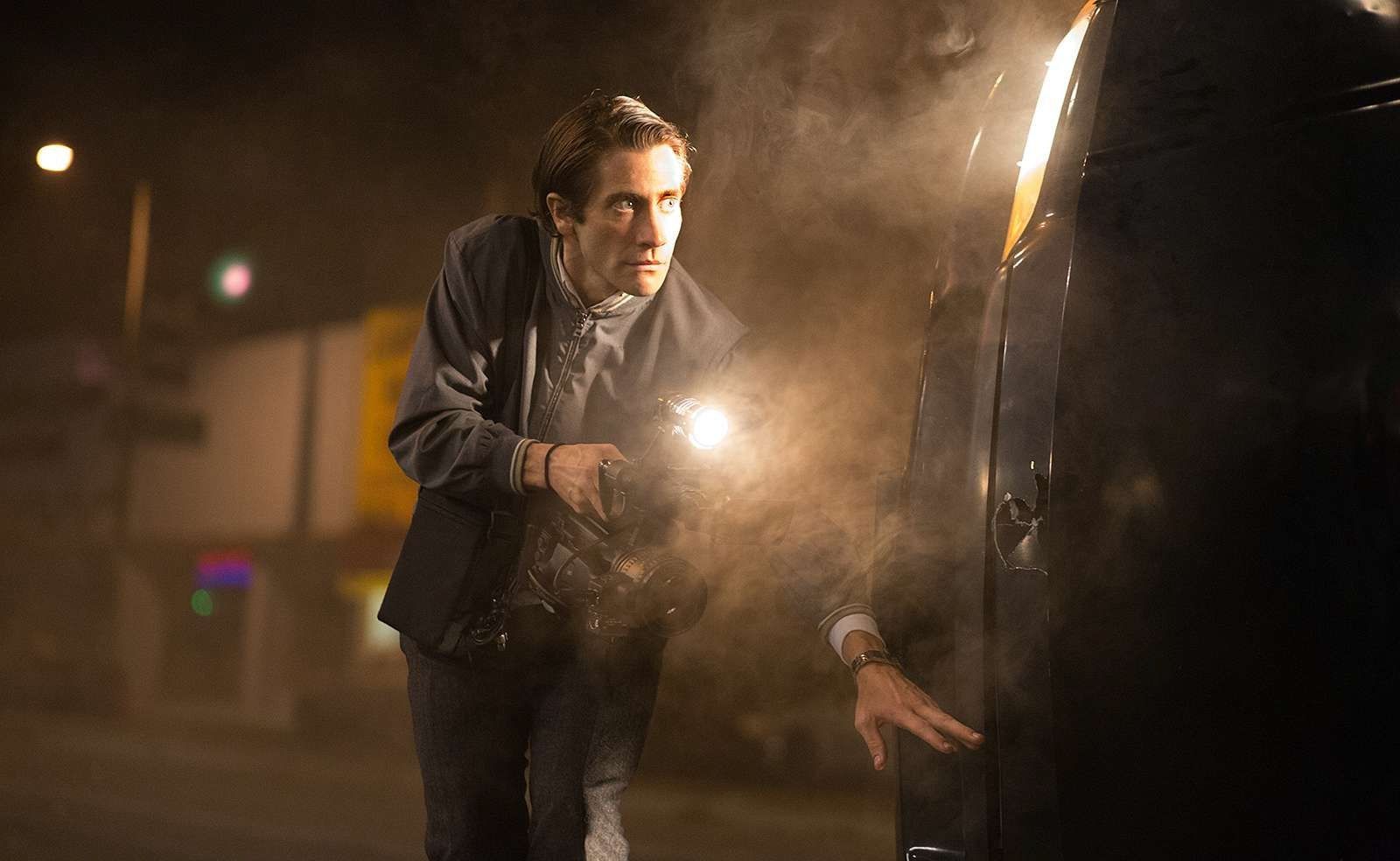
Discover how Robert Elswit's cinematography places the viewer inside the troubled mind of a media scavenger.
Dan Gilroy's 2014 debut film Nightcrawler stars Jake Gyllenhaal in one of his creepier roles as Lou, an increasingly reclusive and paranoid Los Angeles "stringer"—the term for a freelance photojournalist who sells his (violent/disturbing) footage to TV stations. It's a mostly nocturnal profession, and as the movie progresses, Lou retreats further into the darkness, taking an emotional as well as a visual journey that is charted by the cinematography of Robert Elswit, the Academy Award winning DP of There Will Be Blood. In this video, Jack of Jack's Movie Reviews shows how this journey visually unfolds.Watch: How Sergei Eisenstein Used Montage to Film the Unfilmable

Find out how the "Father of Montage" changed filmmaking forever.
If you happened to look something up today, you might've noticed a familiar face on the Google Doodle. That's because January 22, 2018 marks what would've been the 120th birthday of Sergei Eisenstein, the Soviet filmmaking pioneer that helped usher in the modern age of movie making and film editing. If you're not well acquainted with the Latvian director, this video essay from One Hundred Years of Cinema will not only help you get up to speed on his many cinematic contributions but also explain what Soviet montage theory is and how it changed the way we make films today.In the beginning, films were essentially a single shot of, say, a train arriving in a station or workers leaving a factory, that is until "continuity editing" came along. This type of editing allowed filmmakers to cut together sequences of film that resembled real-life, rather than the tedious process that goes on behind the camera.
Wednesday, 3 January 2018
Vissual Storytelling
Storytelling has taken an obvious shape in recent times but visual interpretation has ruined that effort. But this video is meant to put you right and show you how you possibly can tell your story visually and still communicate effectively. How the choice of gadget helps in visual story telling.
https://youtu.be/iWQQgZh9EyE
https://youtu.be/iWQQgZh9EyE
Monday, 1 January 2018
Watch: Where Do Babies Come from (When You're Casting a Movie)?

This video answers a common question among indie filmmakers: how do you cast a baby in a film?
So, you want to employ a baby, huh? Well, guess what, as long as it's for the purpose of acting in your movie you totally can! But you're probably not wondering whether you can or you can't, but how. How in the hell do you cast a baby? Where do they come from? Where do you look? What kinds of legal hoops do you have to jump through in order to keep these precious angels safe and happy and you out of jail? Vox answers all of these burning questions and more in the video below.It turns out that there are a lot of hoops (i.e. child labor laws) you'll have to jump through in order to cast these adorable near-newborns in your film, but the requirements vary greatly depending on which state you're shooting in. Some states require babies to be at least 15-days-old and restrict the amount of time they can work or even be on set, ranging from the very restrictive (two consecutive on-set hours per day with actual work not exceeding 20 minutes) to the severely lax (6-hour, 6-day work week).
Sunday, 31 December 2017
8 Somewhat Unusual New Year's Screenwriting Resolutions for 2018

It's hours before 2018. Where is YOUR screenplay?
I don't know about you guys, but I definitely made good on my New Year's resolution from last year which, of course, was to not resolve to do anything because life is hard enough as it is. However, after experiencing the dumpster fire that was 2017, I figured my current state of complete cynicism and unflinching wide-eyed hope for the future will act as the perfect fuel to write screenplays in the new year.So, here are my 8 New Year's resolutions for 2018, which are, predictably, somewhat unusual.
What Does a Camera Operator Really Do? Watch the Legends Tell It Like It Is
'Three camera operators tell their stories, one frame at a time.'
Ever heard of a "famous" camera operator? Not really, right? That's because they're consistently overshadowed by a distinct chain of command. In the process of crafting a shot, you've got your director with a vision, your DP setting up the course for that vision, and then you've got the guy who physically translates that vision to the camera. How that guy decides to get there however, is arguably one of the most important decisions made on set.Wednesday, 27 December 2017
Evolution Of An Action Sequence - Step by Step
I
wanted to go in depth on how I shot a 3 min action sequence/gun fight
in my short film BROKEN. I had no experience shooting any type of
action whatsoever. Being nervous about shooting this complex gun fight,
I rehearsed…a lot.
When you have a small (or no) budget and you are attempting an ambitious action sequence, rehearsal is your best friend.
When you have a small (or no) budget and you are attempting an ambitious action sequence, rehearsal is your best friend.
BUYING A RED WEAPON 8K WORTH IT?
Here
is the question. I currently own a Toronto based Real Estate
Photography/Video Production business, and it's going quite well. I've
been able to hire a few people, make a very comfortable living, and
everything is perfect.
The truth is, I'd love to start transitioning into more narrative work, being in Toronto there is plenty of gigs out here, but I don't have any contacts and that seems to be the only way to get work (not necessary true I know but let's be honest it's all about who you know). I decided to start my own business instead of going to film school so I only know 1-2 other filmmakers.
The truth is, I'd love to start transitioning into more narrative work, being in Toronto there is plenty of gigs out here, but I don't have any contacts and that seems to be the only way to get work (not necessary true I know but let's be honest it's all about who you know). I decided to start my own business instead of going to film school so I only know 1-2 other filmmakers.
How to make a $1,000 Feature Film with Mark Duplass
Make
a feature film for $1000? Sounds crazy right? Well if you don’t know
Mark Duplass you should get to know him. Mark and his brother Jay
Duplass are most widely know for making the indie film hits “The Puffy
Chair” and “Safety Not Guaranteed.” Mark Duplass has gone on to be a
very successful writer, producer and director.
Mark Duplass had a packed house for his amazing SXSW Keynote Speech 2015. He was spitting out Indie Film GOLD though out his talk.
http://www.indiefilmhustle.com/1000feature
Mark Duplass had a packed house for his amazing SXSW Keynote Speech 2015. He was spitting out Indie Film GOLD though out his talk.
http://www.indiefilmhustle.com/1000feature
How to Write a Screenplay...FAST!
How to Write a Screenplay with FAST with Jeff Bollow
Have you ever wanted to learn how to write a screenplay fast? I know I do. This is why I invited on the show award-winning producer/director, best-selling author, film festival organizer and public speaker, Jeff Bollow.
Have you ever wanted to learn how to write a screenplay fast? I know I do. This is why I invited on the show award-winning producer/director, best-selling author, film festival organizer and public speaker, Jeff Bollow.
Tuesday, 26 December 2017
Watch: The Most Breathtaking Cinematography of 2017

From Deakins and Storaro to relative newcomers, the work of these DPs defined a gorgeous year in cinema.
The cinematography that captured our imaginations this year is a balance of the sweeping and the intimate, the urgent and the languid. In the year when many have predicted that Roger Deakins may finally win an Oscar, we naturally had to include his masterwork Blade Runner 2049, but our list also includes everything from highly stylized period pieces to documentaries to understated narratives that feel like documentaries.To compile our list, we asked No Film School writers to submit a single film that stood out visually above all others for them this year. Excerpts from each were then cut into a supercut by video essayist Nelson Carvajal of Free Cinema Now. See his gorgeous video, and read our thinking behind each inclusion, below.
Watch: The Most Breathtaking Cinematography of 2017
From Deakins and Storaro to relative newcomers, the work of these DPs defined a gorgeous year in cinema.
The cinematography that captured our imaginations this year is a balance of the sweeping and the intimate, the urgent and the languid. In the year when many have predicted that Roger Deakins may finally win an Oscar, we naturally had to include his masterwork Blade Runner 2049, but our list also includes everything from highly stylized period pieces to documentaries to understated narratives that feel like documentaries.To compile our list, we asked No Film School writers to submit a single film that stood out visually above all others for them this year. Excerpts from each were then cut into a supercut by video essayist Nelson Carvajal of Free Cinema Now. See his gorgeous video, and read our thinking behind each inclusion, below.
Creating the Anamorphic look on DSLR
After
seeing Nicolas Winding Refn's "The Neon Demon" - I really wanted to
shoot a short film with the aesthetics of anamorphic lenses. However, my
camera is Canon 650D and I have no idea, whatsoever, how I would get an
anamorphic look with this camera.
19 Iconic Filmmakers & the Focal Lengths & Lenses They Love to Use

Through what lens do your favorite filmmakers view the world?
Not only do lenses change the aesthetics of a scene, but they also change our emotional response to the hero's journey, our attitudes toward what befalls them, and give us an inside look at what the director sees through his own eyes. In this video, wolfcrow's Sareesh Sudhakaran shares the preferred focal lengths and lenses of 19 of our most beloved filmmakers, including Kubrick, Scorsese, Ozu, Spielberg, and Kurosawa.Here's a Lesson from Pixar on How to Choose Your Lenses

In filmmaking, perspective is everything.
If you have a question about how to tell stories, whether through screenwriting or cinematography, Pixar is always a great place to start. Luckily for us, Pixar has teamed up with Khan Academy to produce a bunch of great filmmaking lessons and tutorials for their teaching series "Pixar in a Box," and in this video, DP Patrick Lin and camera lead Adam Habib, both of who worked on Inside Out, explain how to approach and create a crucial concept in storytelling: perspective.
Subscribe to:
Posts (Atom)